Rörstrandsgatan
This is a guest post by Irena Toljan. It first appeared in her newsletter The Third Place on August 19, 2026. She is also on Instagram.
A few days ago we were on Södermalm analyzing Hornsgatan, and now we are moving to the extended city center, to Rörstrandsgatan!
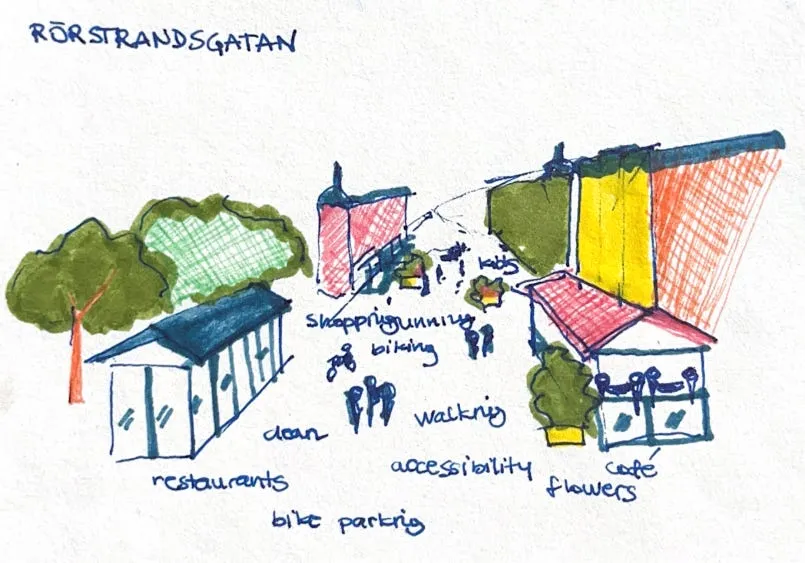
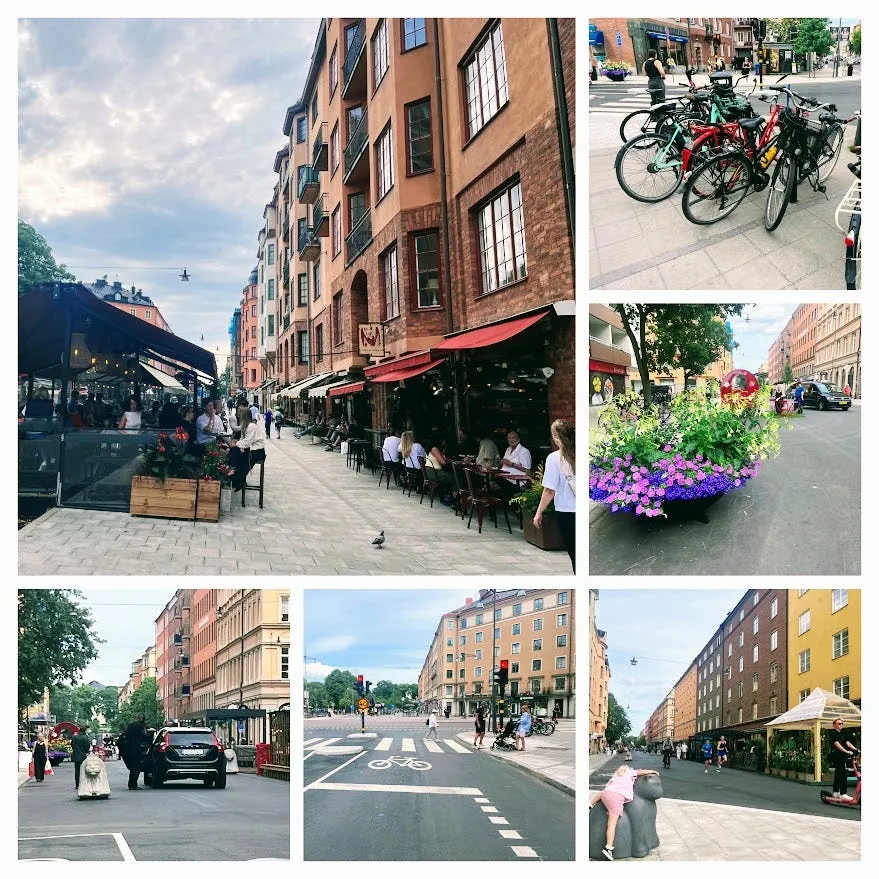
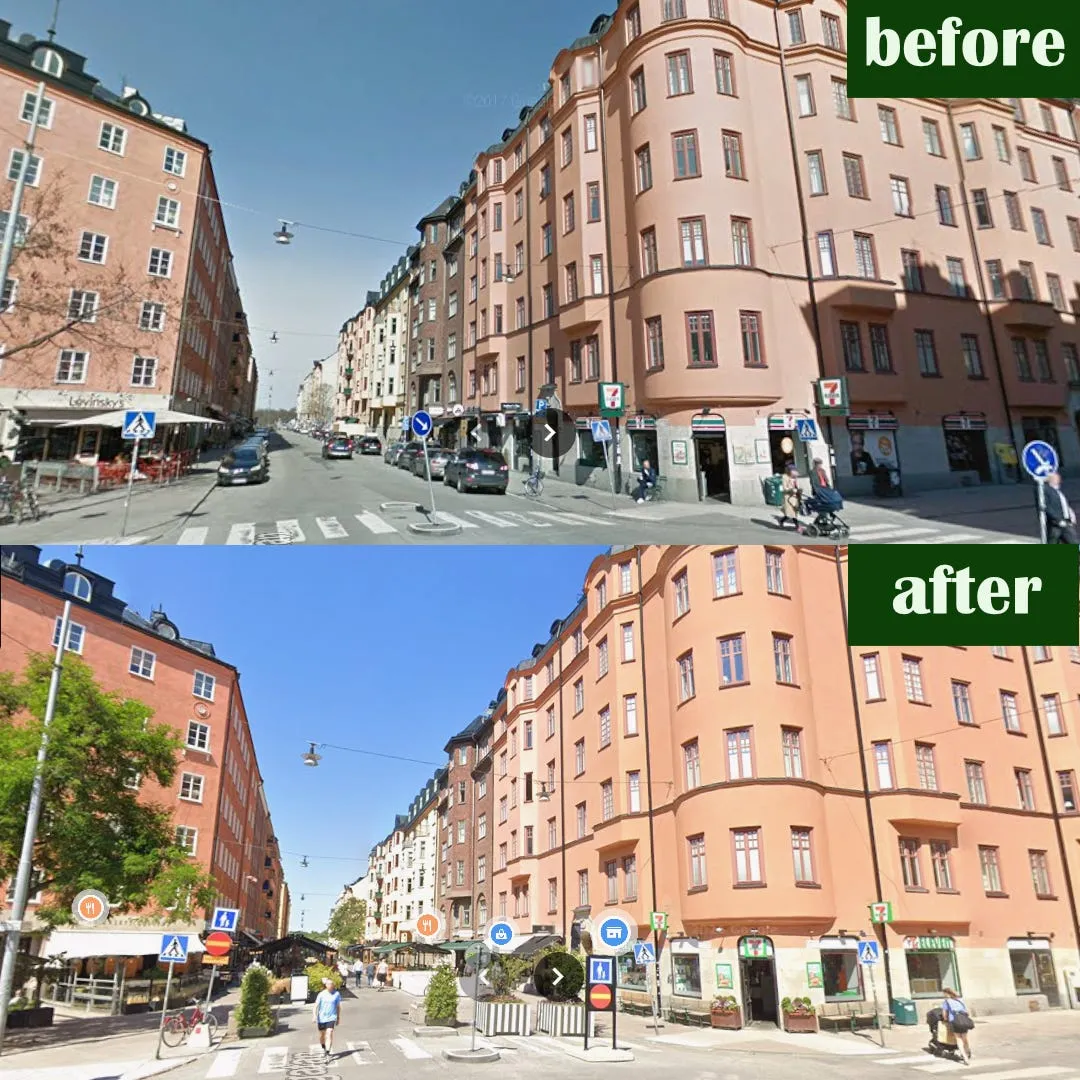
Since 2016, Rörstrandsgatan has led the way in Stockholm’s sommargågator movement. The street now draws about 12,000 visitors each day (source 7) and is known for its pedestrian-friendly atmosphere. It was designed for buses that went to Karlbergs pendelstation, and the street’s unfortunate width was turned into something positive. A place for restaurants, shops, and cafes. The transformation is ongoing.
- Employment in the area has grown by 40%. Jobs in restaurants increased by 22%, while traditional retail jobs fell by 9%. This shows a move toward a more active, service-focused economy (source 4).
- Data shows what business owners thought in advance and how they felt afterward. In the summer of 2016, Rörstrandsgatan in Vasastan became a summer street for the first time. A master’s thesis from KTH interviewed all 19 business owners on the street before and after the season: ten restaurants, six retailers, and three bulky-goods businesses (KTH 2017, p. 56). Before the summer, 78.9% believed customers would appreciate the pedestrian street (p. 58). After the season, 100% said customers had indeed appreciated it (p. 61). Fears about goods deliveries also did not materialize: 94.7% felt deliveries had gone well, and businesses with the bulkiest goods described them as easier than before, since no parked cars were blocking the space outside their premises anymore (p. 61).
- 50 parking spots were removed from the street, but 30 new ones were added nearby. However, ongoing traffic and not enough bike parking make it harder to achieve the goal of putting pedestrians and cyclists first (source 8).
- Almost all visitors, between 97 and 100 percent, feel safe during the day, and 70 to 80 percent feel safe at night. Many people want more seating and more greenery. Businesses say the area feels livelier now, especially for restaurants and cafés (source 9).
- On Rörstrandsgatan’s summer street, most people feel secure during daytime (96%). Nighttime (93%) (source 9).
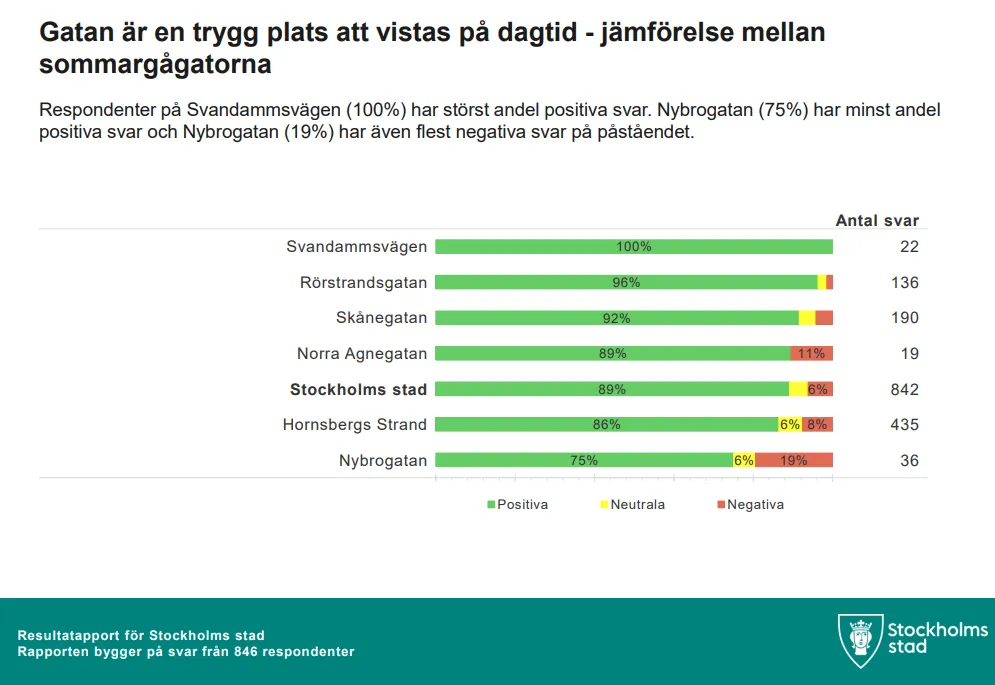
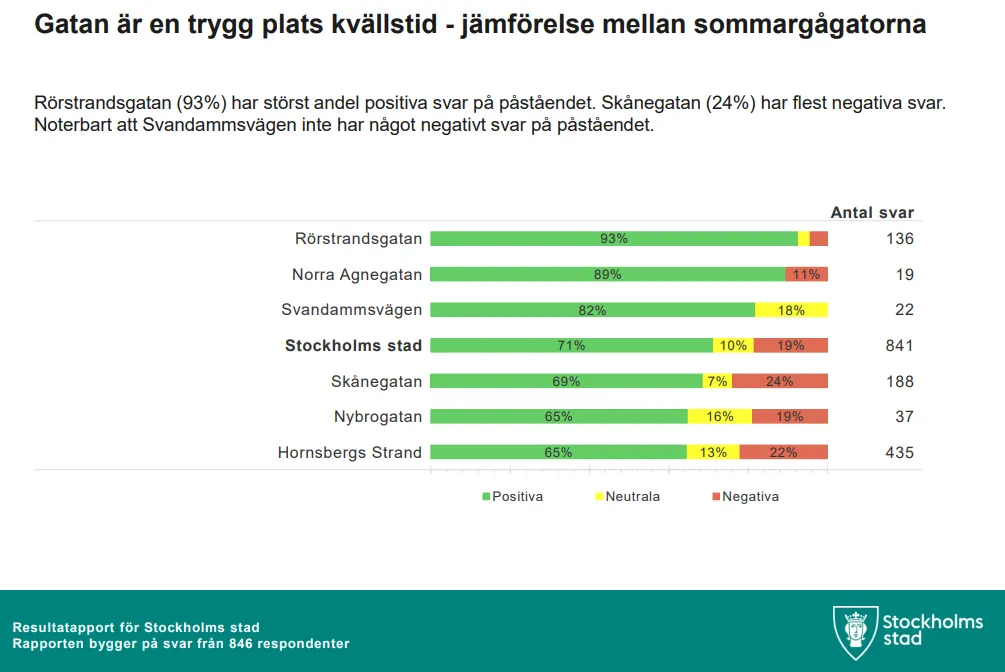
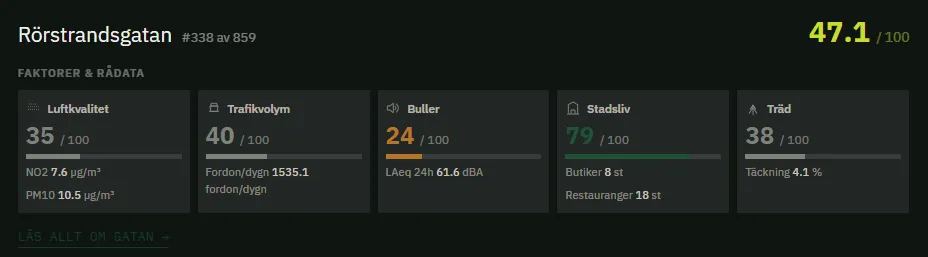
The numbers come from the street league, where Rörstrandsgatan ranks 338 of 859.
The statistics show that there is still too much traffic. Let’s see if the numbers change now that the street is ‘pedestrian’. I am a bit pessimistic since you can still see surprisingly many cars parking, dropping people off, and trying to maneuver around pedestrians. I have gotten some really useful comments on Reddit that made the analysis easier.
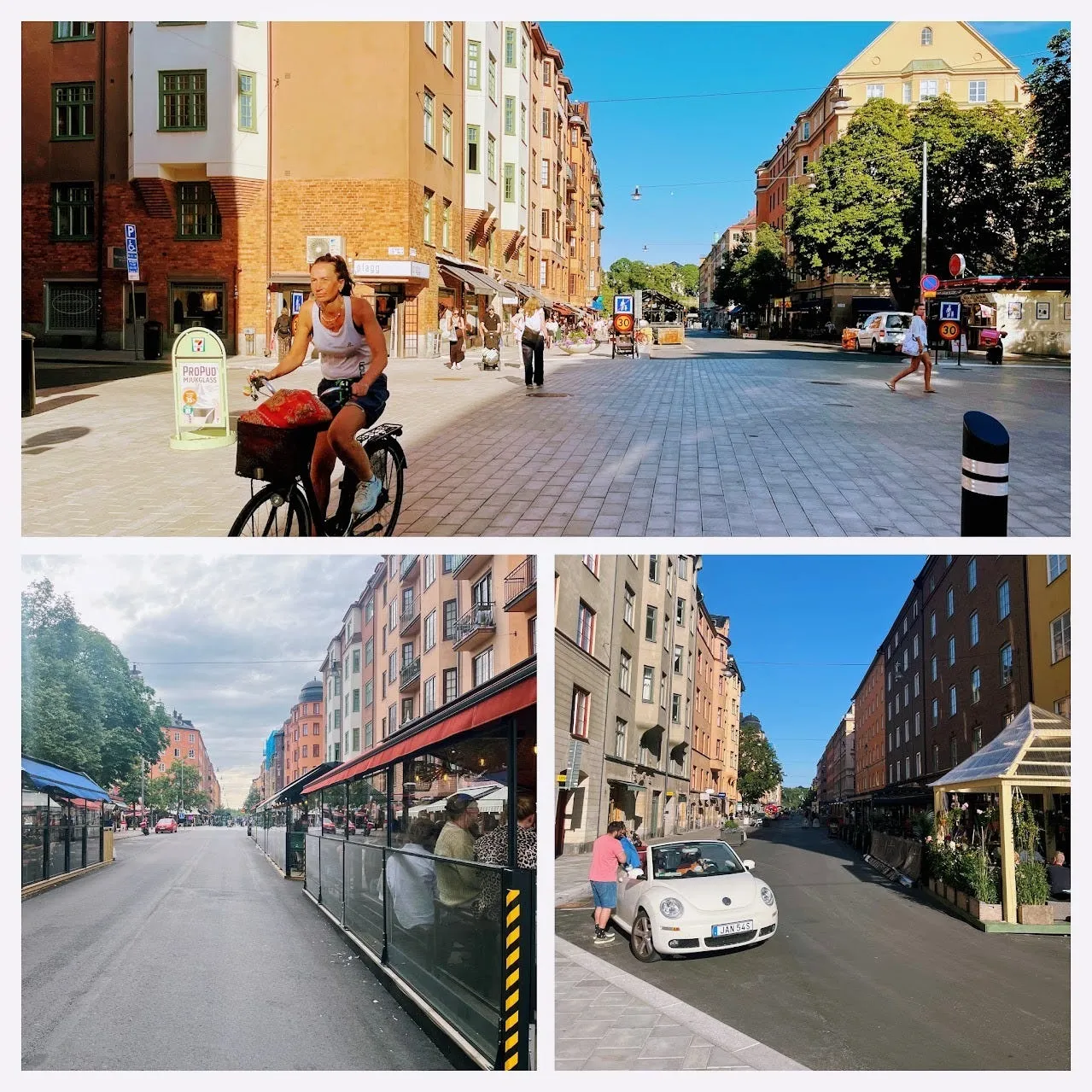
The street has expanded sidewalks and well-designed slow-traffic areas, like the intersection at Rörstrandsgatan-Birkagatan, which now feels more like a plaza. Additionally, while the street boasts many restaurants, the quality is a bit questionable, and the dominance of burger joints highlights a need for greater diversity. Also, all glass bar boxes don’t look particularly sophisticated. It would be nice to create a design that is both unique and uniform.
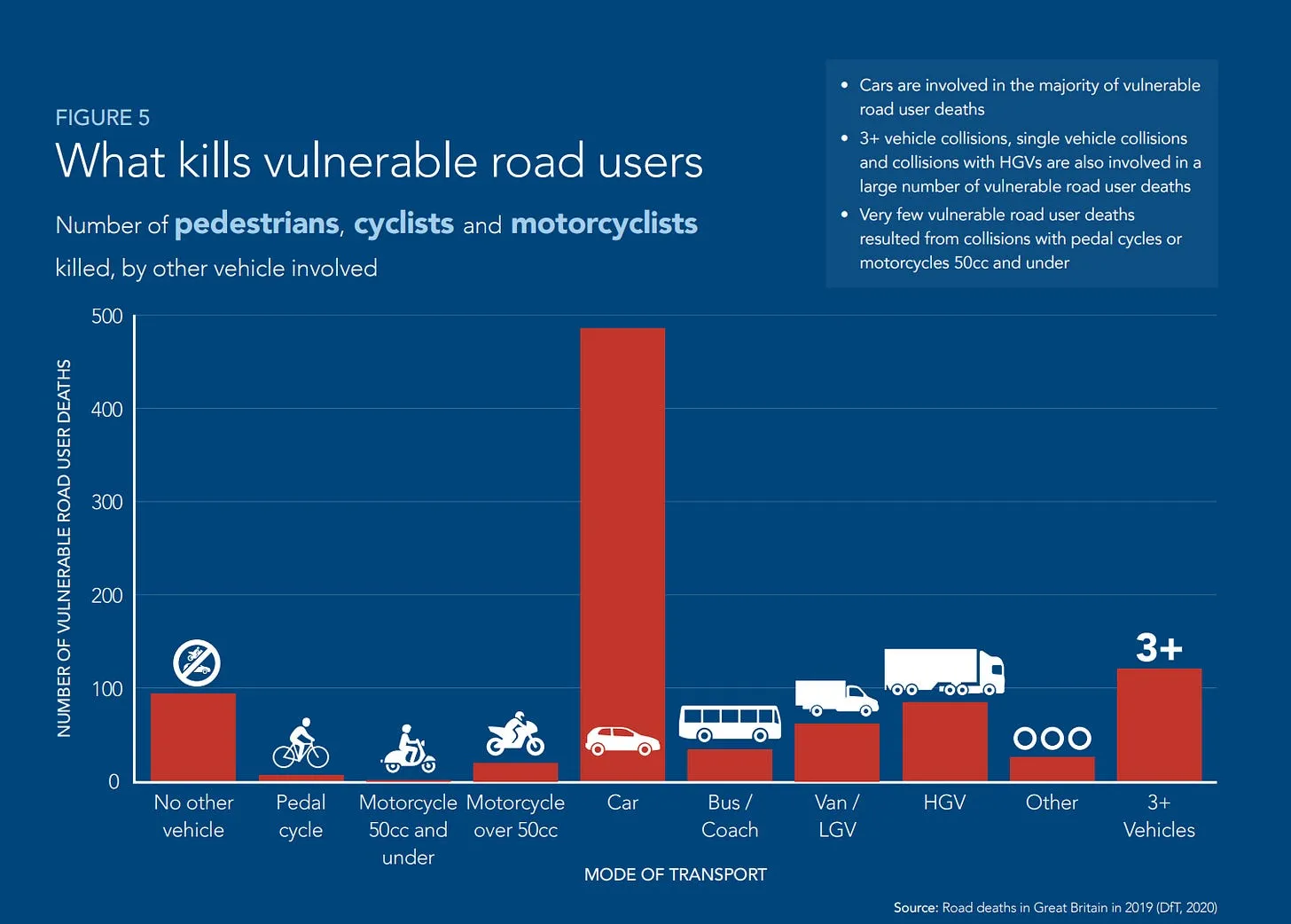
Reduced car traffic inherently improves pedestrian safety, but some point out that cyclists and e-scooters still pose risks, especially in crowded areas. However, physically, let’s not forget that the risk of severe injury from a bike is far lower than from a car, even at similar speeds. The debate underscores the difference between perceived and actual safety, a key consideration for future urban planning in the area.
Nevertheless, there are ways to slow bikes and scooters and make them more responsible on pedestrian streets, such as changing the asphalt and adding speed bumps. This would be the great next step for this street.
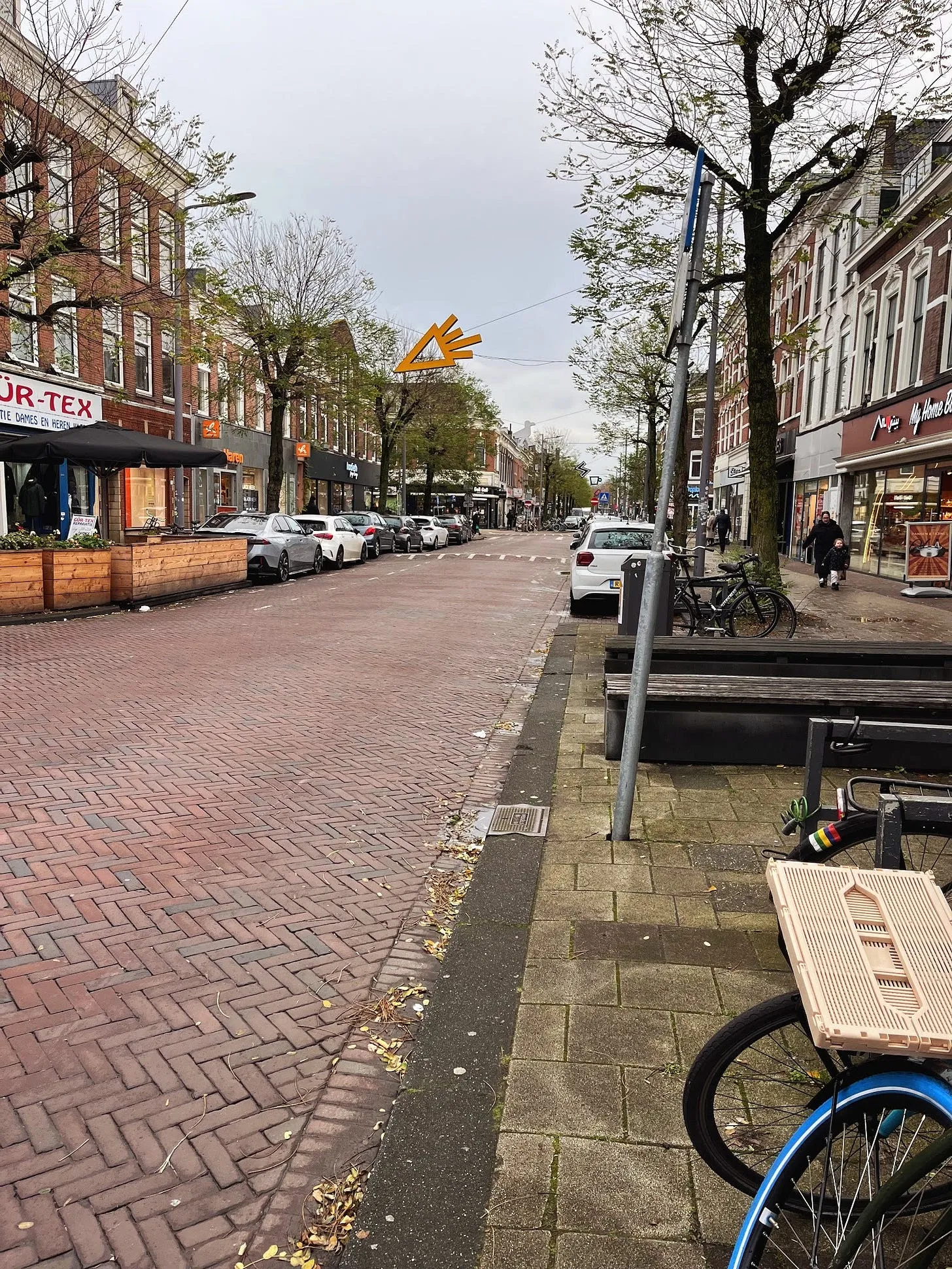
A typical Dutch street in Rotterdam, with bricks and speed bumps instead of asphalt.
What’s your take? Have you experienced Rörstrandsgatan firsthand? Share your thoughts!
Sources
- Admin (2024). Cyclists and Pedestrians Contribute Significantly to City Centre Spending. Dutch Cycling Embassy. Accessed 27 July 2026.
- Debattredaktionen (2026). Låt fakta och inte magkänsla styra stadsutvecklingen. Dagens industri. Accessed 27 July 2026.
- The Power of 10+. Project for Public Spaces. Accessed 27 July 2026.
- Gatupotential (2025–2026). Spacescape. Accessed 27 July 2026.
- Ny bryggpromenad och upprustad strandpark på Bergsunds strand (2026). Stockholms stad. Accessed 28 July 2026.
- Munkbrohamnen. Visit Stockholm. Accessed 28 July 2026.
- Miljöpartiet Stockholms stad on Instagram: “Sommargågatan Rörstrandsgatan är ett av Stockholms livligaste stråk som 12 000 personer passerar varje dag.” (2025). Instagram.
- Rörstrandsgatan blir gågata året om (2026). Stockholms stad. Accessed 28 July 2026.
- Levande Stockholm 2018: Resultatrapport. Stockholms stad. Accessed 28 July 2026.
- En del av Hornsgatan blir gågata året om (2026). Stockholms stad. Accessed 28 July 2026.
- Sommargågata (2026). Solna stad. Accessed 28 July 2026.
- Trots utslaget Sverige: här fortsätter VM-festen (2026). Mitt i. Accessed 28 July 2026.
- Saber, Joanna (2017). En plats att vara på: den tillfälliga gågatans inverkan på Stockholms stads- och näringsliv. Master’s thesis, KTH School of Architecture and the Built Environment.
Read next
Hornsgatan
Car-free weekends have moved from Sveavägen to Hornsgatan. A guest post by Irena Toljan on the first two weekends, a shop owner's suggestions, and the plan to pedestrianize part of the street.
5 min readUtan bilen stannar Sverige – without the car, Stockholm lives
The phrase 'Utan bilen stannar Sverige' (without the car, Sweden stops) feels like folk wisdom but is a campaign slogan, launched in January 1980 by the car industry's trade association to fight unleaded petrol and catalytic converter requirements. This is the story of the campaign.
9 min readStockholm's Summer Streets 2026: The Champions
Last time, I broke down why summer streets matter. Now, let's rank them, from "decent but could do better" to "urban paradise."
7 min read